
Description
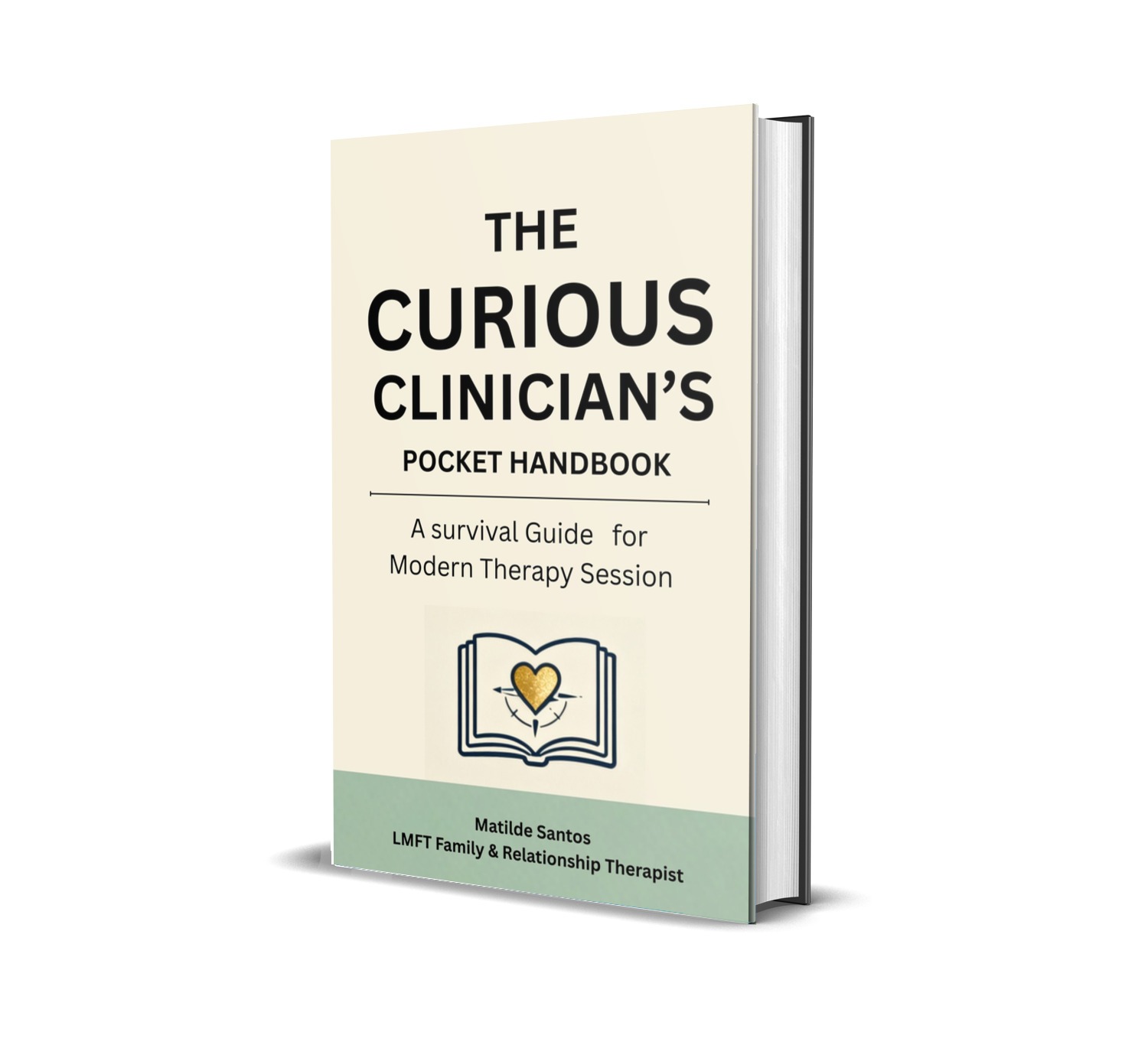
THE
CURIOUS
CLINICIAN’S
POCKET HANDBOOK
A Survival Guide for Modern Therapy Sessions
It happens in every practice.
The session that stalls mid-flow.
The silence that feels heavier than words.
The moment you reach for guidance—and want something practical, right now.
You have the training. You have the heart.
You know the theory. You trust the process.
But in the room, in the moment—you need a tool that works.
And still, some sessions leave you wondering: “What now?”
Here’s what this handbook offers:
Not more theory. Not another framework to memorize.
This is a pocket-sized companion for the real work of therapy—written by a practicing LMFT who has sat in your chair. Quick flowcharts. Exact scripts. Risk protocols that protect. Cultural nuance that honors. All designed for the moments when curiosity matters more than certainty.
This is not about having all the answers.
This is about staying present enough to find them—together.
The Curious Clinician’s Pocket Handbook is not another theory-heavy textbook. This is a clinical field guide—concise, bulleted, action-oriented.
Inside, You Will Discover:
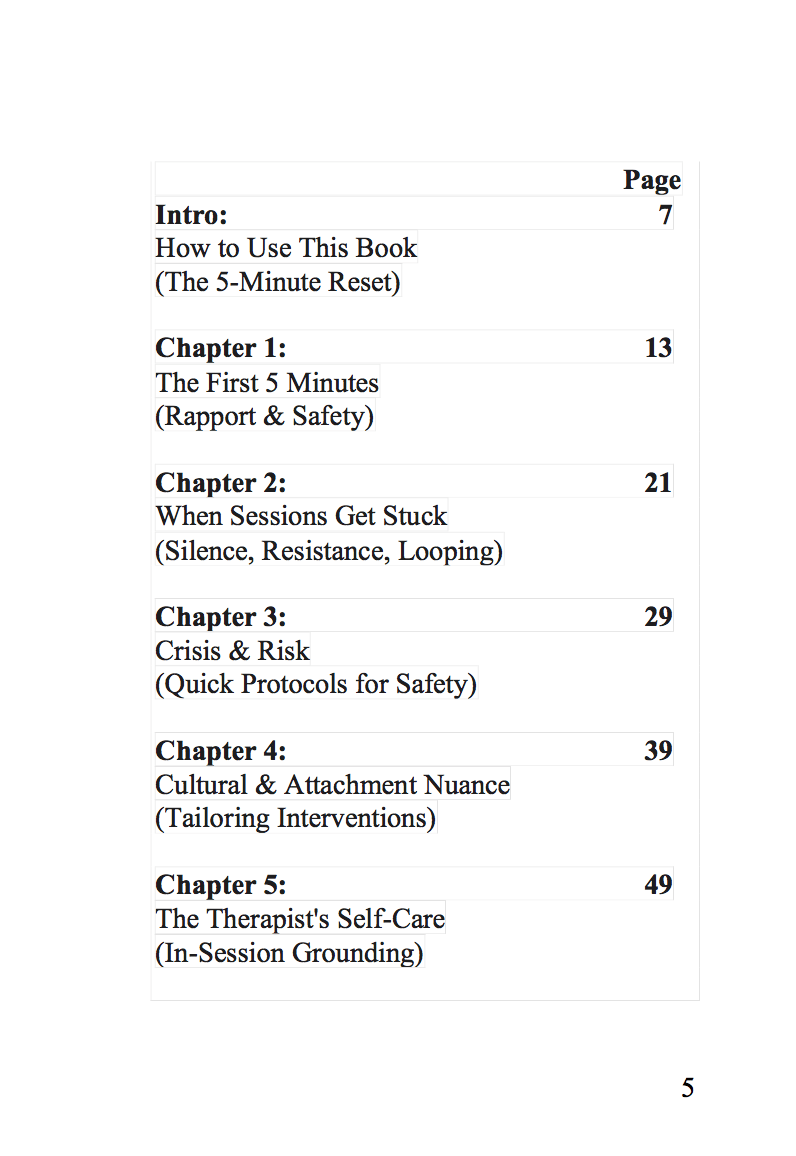
When Sessions Get Stuck
Flowcharts for silence, resistance, and looping—with scripts that unstick.
Risk & Crisis Protocols
Clear, defensible steps for safety assessment—without panic.
Cultural & Attachment Nuance
Adapt interventions with humility, not assumption.
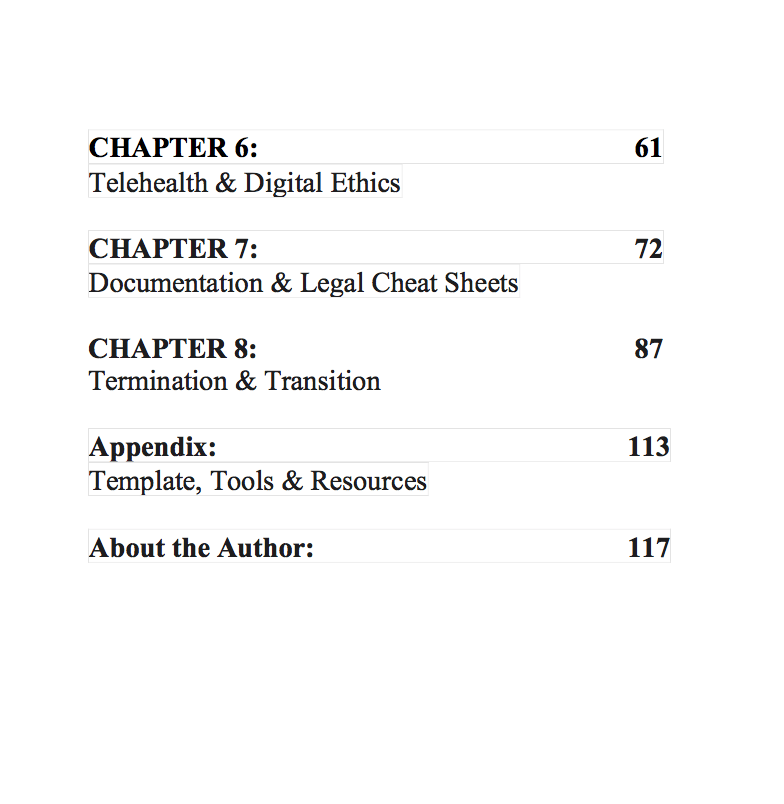
Telehealth & Digital Ethics
Checklists for security, boundaries, and crisis across the screen.
Documentation That Protects
SOAP templates, legal cheat sheets, and phrasing that holds up.
Therapist Grounding
60-second resets to stay present—because you cannot pour from an empty cup.
It starts with having the right resource at the right time. It starts here.
Written by a Practicing Clinician. Designed for Real Sessions.

Matilde Santos, LMFT
Licensed Marriage & Family Therapist | Cognitive Behavioral Specialist
Hi, I’m Matilde. If you’ve ever sat across from a client and felt stuck, this handbook is for you.
I’ve supported individuals and couples for years through relational depth, attachment patterns, and everyday resilience. My approach blends evidence-based tools with compassionate presence—helping therapists move from reactivity to responsiveness, without losing themselves in the process.
This handbook is the collection of scripts, flowcharts, and reminders I use in my own practice and share with fellow clinicians. Because curiosity, not certainty, opens the door to change.


Dr. Michelle P., PhD | Counseling Psychologist (store manager) –
I’m mid-career, but I still hit moments of stuckness. The ’60-Second Reset’ in Chapter 5 has become part of my routine between sessions. It’s helped me stay present without burning out.
Dr. Elena M., PhD | Health Psychologist, Clinic Director (store manager) –
I switched to remote work and felt uneasy about crisis protocols over video. Chapter 6 gave me clear checklists and scripts I could use immediately. I feel more confident and legally protected now.
Dr. David H., PsyD Licensed Psychologist & Group Practice Owner (store manager) –
This handbook embodies the best of modern therapy. It doesn’t promise fixes; it offers tools to stay engaged. The cultural adaptation section is nuanced and respectful. I’ve already bought copies for my team.
Dr. Sarah L., PhD | Clinical Psychologist, Private Practice (store manager) –
I have shelves of theory books, but this is the one I keep on my desk. When a session stalls or risk feels high, I don’t need more theory—I need a script. This handbook delivers exactly that. The flowcharts alone are worth the price.
Dr. Ambra K., PsyD | Licensed Psychologist & Clinical Supervisor (store manager) –
As a supervisor, I see early clinicians struggle with ‘what do I say next?’ This book answers that question without oversimplifying the work. It balances evidence-based practice with relational warmth. A must-have for training programs.
Dr. Roberta T., PsyD | Forensic Psychologist (store manager) –
I was skeptical—another ‘pocket guide’? But Matilde gets it. This isn’t about replacing clinical judgment; it’s about supporting it. The documentation cheat sheets are gold. Best $15 I’ve spent on CPD this year.
Dr. David C. PhD, Counseling Psychologist –
What I appreciate most about this handbook is its philosophical grounding: ‘curiosity matters more than certainty.’ It doesn’t give you rigid rules; it gives you tools to stay present and collaborative with the client. The documentation cheat sheets and SOAP templates have already saved me hours of administrative dread. Highly recommended for clinicians at any stage of their career.
Dr. Elena R. PhD, Licensed Psychologist –
This is a brilliant, no-nonsense field guide. The risk and crisis protocol checklists are exceptionally clear and defensible, which is a huge relief in today’s litigious environment. I’m giving it 4 stars only because I would have loved a slightly deeper section on navigating complex trauma presentations, but for a pocket handbook, it absolutely delivers on its promise of being concise and action-oriented.
Sarah J. LMFT, Private Practice Owner –
The ‘Therapist Grounding’ section alone is worth the price of this book. We talk so much about client regulation, but rarely about the clinician’s 60-second reset mid-session. This book understands that you cannot pour from an empty cup. The telehealth ethics checklist is also incredibly thorough and up-to-date. A must-have for modern practice
Dr. Sofia M. PsyD, Director of Clinical Training –
Graduate programs teach us the ‘what’ and the ‘why,’ but this book masterfully addresses the ‘how.’ The cultural nuance guidelines are particularly well-done, encouraging adaptation without assumption. It’s a compassionate, wise, and deeply practical companion for anyone sitting in the therapist’s chair. I’m buying copies for my entire cohort.”
Dr. Amelia V. PsyD, Neuropsychologist & Therapist –
I have shelves full of brilliant, dense academic texts. This is the one I actually reach for on a Tuesday afternoon when a session takes an unexpected turn. The bulleted, action-oriented format is respectful of a busy clinician’s time. The risk assessment protocols are clear, calm, and highly effective. A brilliant contribution to the field
Mark T., LCSW, Clinical Supervisor –
I bought this for my supervisees, and it has become a staple in our agency. The cultural and attachment nuance section is handled with the right amount of humility and practicality. My only critique is that some of the scripts might feel a bit too structured for highly experienced clinicians, but for anyone building their clinical toolkit, it’s a 5-star resource
Dr. Robert H. PhD, Clinical Psychologist –
A very strong, practical guide. The flowcharts for when sessions get stuck are intuitive and easy to memorize. I dock one star simply because I wish the digital ethics section had a few more examples regarding asynchronous communication (like secure messaging), but overall, it’s a fantastic, quick-reference tool that I regularly recommend to my colleagues.
Dr. Marcus T. PsyD, Clinical Psychologist –
As a supervisor for early-career clinicians, I constantly hear the same refrain: ‘I know the theory, but what do I actually say when the room goes silent?’ This handbook is the answer. The flowcharts for navigating resistance and the exact, adaptable scripts are invaluable. It’s not trying to replace our clinical judgment; it’s giving us a reliable scaffold when we need it most. Keeps a permanent spot on my desk.
Dr. James C, PhD, Licensed Psychologist –
Concise, bulleted, and immediately applicable. Whether I’m prepping for a difficult safety assessment or just need a quick grounding reminder before walking into the office, this handbook has it. It validates the reality that even experienced therapists wonder ‘What now?’ sometimes, and it provides the exact tools to navigate that uncertainty with grace and competence